
The Eagle’s Graveyard is in the Persian Gulf
An interview with Andrew Gawthorpe on institutional collapse, Iran's strategic patience, and the end of American primacy in the Middle East.


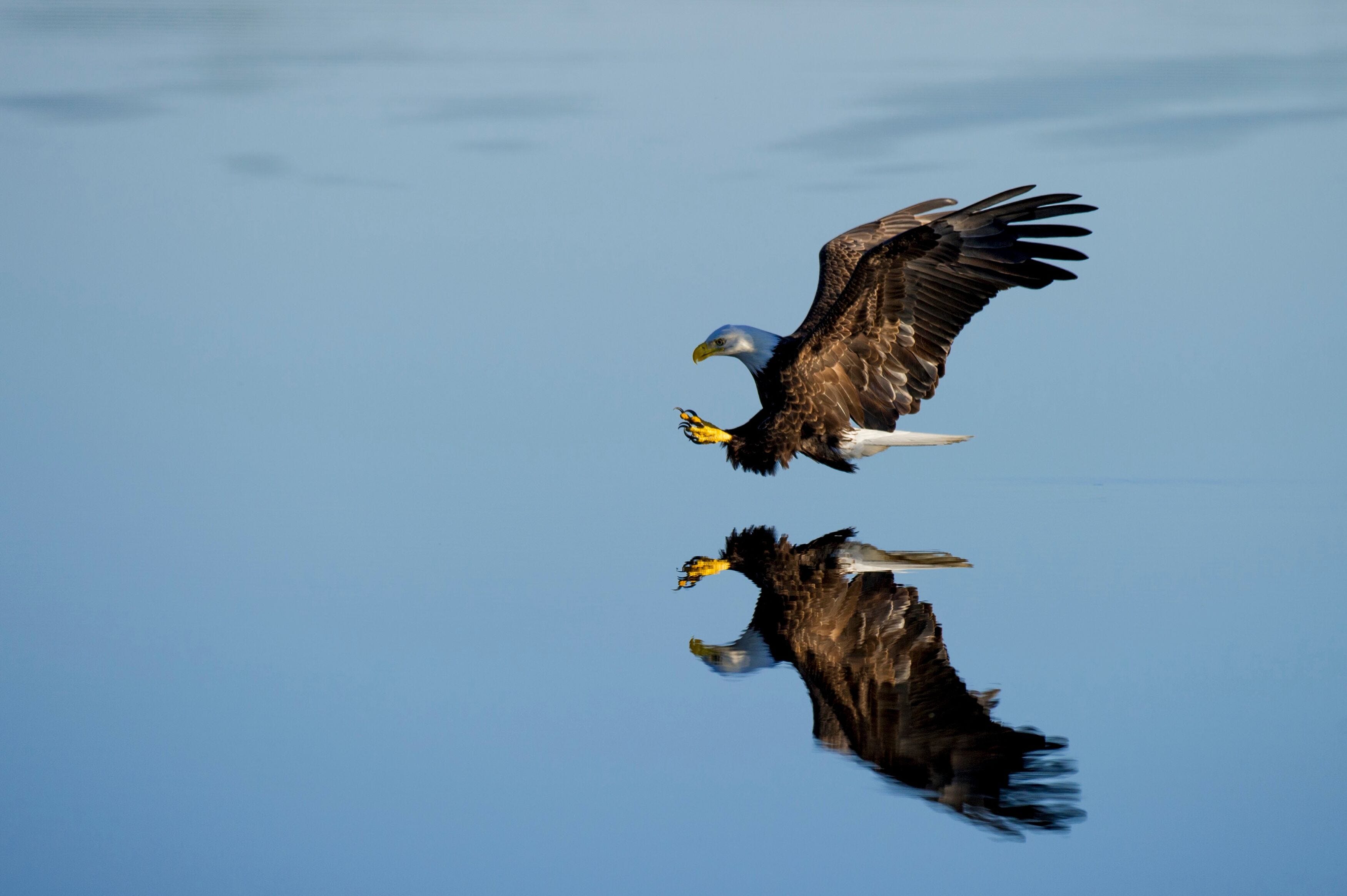
The eagle once flew powerfully above the Euphrates, with predatory eyes. Now it has found its graveyard in the Persian Gulf. How could this have happened? Though Trump is a symptom of longer-simmering tensions within the US, he is the proximate cause of the rot inside the American state. That is the conclusion I drew from a long conversation with Andrew Gawthorpe, a historian of US foreign policy at Leiden University, and author of the substack America Explained.
American unipolarity found its most prominent expression — rhetorically and physically — in the Middle East at the turn of the century. Bush captured it in a single maxim post-9/11: “Every nation, and every region, now has a decision to make. Either you are with us, or you’re with the terrorists.” This speech was followed by thunderous applause. With the same thunderous sound, bombs would drop in the Middle East the following decades.
“History has called us to these responsibilities,” said Bush in 2002. “And we accept them. America has always had a special mission to defend justice, and advance freedom around the world. Whatever the difficulties ahead, we are confident about the outcome of this struggle. Tyranny, and terror, and lawless violence, will not decide the world’s future. The future belongs to the free.”
Contrast that with the words of President Donald J. Trump two decades later. “A whole civilization will die tonight, never to be brought back again.” Those words sound hollow. Bush’s wars invite their own moral and strategic scrutiny. But there is a fundamental difference in the rhetoric. It does precisely the opposite of projecting power. These words are drenched with weakness — the flailing spasms of a crumbling empire.
That weakness has now manifested in what Trump — in his hollow real estate language — calls a “deal”. The Memorandum of Understanding that seems poised to be signed looks like total capitulation if we are to believe the details put forward by the Iranians. It is telling that we now sooner believe the horrendous Iranian regime on the details than the United States.
It is uncertain what the “deal” will look like, but numbers that circulate from the Iranian side are $300 billion in reconstruction commitments from the US and allies, $24 billion in released frozen funds, half before negotiations even start, and the complete lifting of the naval blockade within 30 days. Hormuz would reopen, but under Iranian arrangements, meaning Iran keeps management of the strait. Iran’s deputy Foreign Minister called it “total victory”.
Total US defeat
For this series I interviewed three experts, Iran-expert Damon Golriz, Middle-Eastern geopolitics specialist Michel Don Michaloliákos, and the expert for this article: Andrew Gawthorpe. They all agreed that this is for now indeed, total victory for Iran, and total defeat for the US. The only question that remains is whether this will remain.
I asked Gawthorpe whether this was the end of US hegemony. He would not be hurried into calling it that, but he came close.
“What really matters for the US in the Middle East is the free flow of oil, which means the Strait of Hormuz staying open,” he told me. “At no point since the Second World War has the US accepted a hostile power controlling such a strategic sea lane. That has been a fundamental principle. So if Iran solidifies its control of the Strait, yes — I could come around to calling it a step towards the end of US hegemony. So much so that I struggle to see how the US can accept it in the long term.”
So you think this will reignite the conflict? Will it continue to simmer?
“There is now an announcement of some sort of agreement, but in reality not much would actually change. There will be ups and downs, ups and downs. But this doesn’t end without the US either using military force to reopen the Strait of Hormuz or definitely calling it a sign of the end of American hegemony — because that would mean accepting something they have never accepted before, and it has a very real strategic impact.”
Indeed, much stays uncertain as of the time of writing. The two sides both need to sell this as a victory. Part of the problem, Gawthorpe thinks, is that there is an asymmetry of information on both sides of the negotiating table.
It felt like the Iranians needed to throw Trump a bone before he accepted anything. Is that the way you’d look at it?
“It can’t just be throwing him a bone. The reason they haven’t been able to reach a peace agreement yet is because on each side, it seems that they feel they have the upper hand right now.
“Iran feels it has more leverage to push the conflict, and it’s not in a position to give Trump what he needs. Trump tends to lean towards doing whatever he thinks he can get away with, and billing it as the greatest diplomatic achievement in the history of the world.
“In a position like this, it’s hard to see what would allow him to frame this as a victory. It’s not a worry, it’s just a factory-made stalemate.”
Outside of the US, everyone seems to think that the US is losing. Why does Washington not see it that way?
The establishment does, Gawthorpe says — the Pentagon understands the war has been a disaster. Trump does not, and that is a function of who he hears from.
“He has constructed a bubble to such an extent that he doesn’t really hear from objective or external voices, only from people who are part of his family or personal circle,” he told me. Those voices tell the President that Iran has been gutted and its new leadership is weaker than the last. “He just won’t admit it was a disaster. You’ll never see him put out a statement that truly reflects where things stand, because that would be to admit defeat.”
The only thing Trump has seemed successful at is the manipulation of financial markets. Oil is currently trading as if the Strait has already reopened, while mines still have to be cleared and tankers need to reroute.
I asked Gawthorpe if Trump is conscious of what he is doing. He doubts the manipulation is purely strategic. Trump, he says, is “just an unfiltered stream of consciousness with very loose connections to reality.”
He does acknowledge the market-narrative pressure exists — “that element is there too” — but thinks it is incidental rather than calculated. “It’s so transparent, right? He’s saying every day there’ll be a deal tomorrow, or a deal on Tuesday, or whatever.”
My guess is that it’s an uncoordinated outcome of Trump’s personality and his desire to keep oil prices low — which would explain recent reports that Iranian negotiators have started treating him like a mentally ill patient.
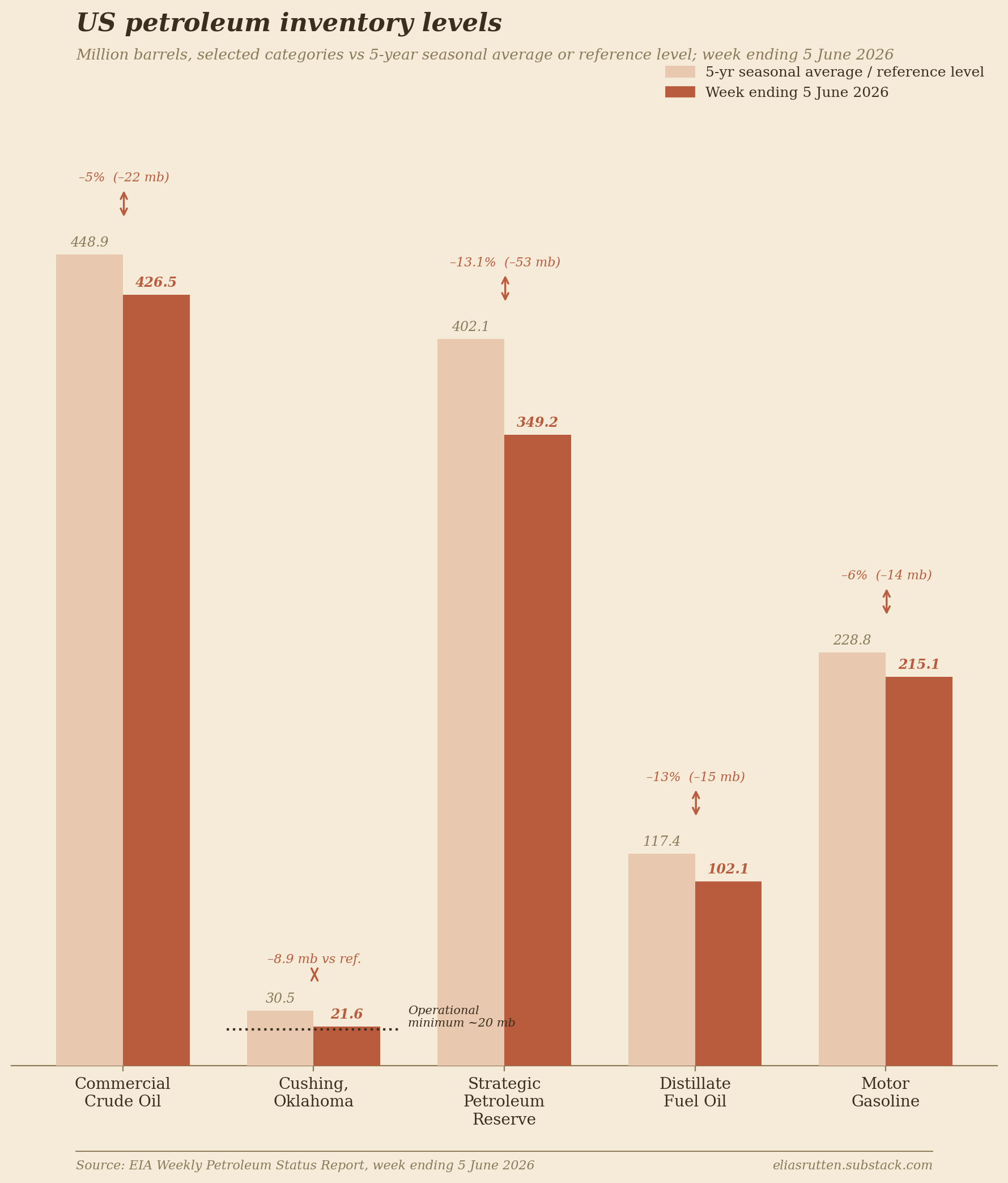
In my previous article in this series, I analysed why the pressure finally got to Trump and forced at least a temporary cessation of hostilities. And that is that the US strategy of stabilising international oil markets with surging exports had become unsustainable, Cushing Oklahoma — the place where WTI (US oil benchmark) gets priced — is almost at the operational minimum level, and the strategic petroleum reserve is almost at critical levels.

The Iranians running out the clock
My reading was that the Iranians are running out the clock — slowing the negotiations deliberately, waiting for Trump’s impatience to force a mistake. Gawthorpe thought the picture was simpler than that.
“What the Iranians want is formal recognition of control over the Strait of Hormuz, rights for their nuclear programme — including maintaining enrichment capability — and keeping their missile arsenal. Their aim is to stay in the diplomatic process just long enough to get the Americans to concede, or until Trump realises there is nothing he can do about it.”
The military option, he said, has effectively been taken off the table — the cost of reopening the Strait by force is simply too high. What Iran is waiting for is the moment when the current situation hardens into the new order of things. “The Iranians at every point seem to be fairly successfully daring Trump to start the war again, and that’s been very effective. They really don’t look like people who are on the back foot.”
A new security architecture is being laid down in the Middle East and Iran is its principal driver. Can you elaborate on that?
“I mean, two things are really important. One is Iran’s control of the Strait of Hormuz — it’s now using that lever to give it leverage over other states in the region, as well as the United States. What I find really interesting about this is that a Middle East regional order in which Iran is able to call the shots to this extent is exactly what the hawks used to say they were worried about if Iran got a nuclear weapon. They used to say: if Iran gets a nuclear weapon, it’s going to be able to bully its neighbours, bully Israel, and there’ll be nothing we can do about it. But that world is basically now coming into existence — and Iran doesn’t even have a nuclear weapon. They just showed they control the choke points. That’s basically what it is. They don’t even need a nuclear weapon — they can do what they can do to the Strait of Hormuz.
“I think a few things logically follow from this in the long run. First, the Gulf states are in a very bad position. They basically allied themselves with the US and Israel, buying into this idea of an anti-Iran military containment strategy — and that’s falling apart now. The Gulf states, due to geography, are still sitting right next to Iran, basically absorbing its missiles. If the US annoys Iran, Iran attacks the UAE. It’s a really difficult position for the Gulf states to be in, and it’s hard for me to believe that in the long run they’re not going to have to reach some accommodation with Iran and essentially shift into its orbit. Because at the end of the day, America is really far away and has a lot of other things to worry about. So I think Iran has a pretty good shot at establishing some new rules in the region — unless the Americans are willing to re-escalate this war to a very high level and do more damage to Iran.”
I think it’s safe to say that the US has gone from hegemony through leadership towards dominance through coercion — but what you’re describing would be a structural break, not just a Trump incident. Could you say Trump has permanently damaged the US’s strategic position?
“I want to be careful about answering in such finite terms. If the Strait remains under Iranian control, people will develop workarounds — pipelines are already being built, alternative routes. What I do think is that Trump has effectively ceded the Strait of Hormuz, and in doing so demonstrated a real weakening of American power in this era. In itself it’s not necessarily the absolute end of American power — I don’t think it can be called that yet — but it is significant. It will make it significantly harder for Americans to maintain their position in the years to come.”
Does this change the rules of international relations, or continue them?
Gawthorpe resisted the word “new,” but he was clear about what the war exposed. “Global competition today is about chokepoints and supply chains,” he said. “It’s not so much about territory and population any more, it’s about controlling these key geoeconomic nodes.” Trump went to war over a twenty-year-old anxiety about an Iranian bomb and ended up fighting over a choke point in the global economy. “That’s an old way of thinking colliding with new realities.”
It’s weaponised interdependence, I said.
“Yes, exactly.” What gets him is how avoidable the lesson was. “Literally twenty years ago, it was just common knowledge that if you go to war with Iran, they will close the Strait of Hormuz. For as long as an American attack on Iran has been debated — twenty years — it’s been there. The complete ignorance of that point is mind-blowing to me. He’s not drawing on expertise, he’s not drawing on people who know what they’re talking about, and it’s very dangerous at this moment.”
I told Gawthorpe I had overestimated the administration at first. Previous Presidents delegated tasks on which they had little competency. This administration seems different: Trump is too dominant, and the capable people around him, a Bessent or a Rubio, either lack the influence or the will to check him. I asked him why.
“They bring this decision-making dynamic — you can see where, at the end of the day, all that matters is what Trump thinks and does. Rubio also wants to be president after Trump, so he can’t afford to put too much distance between himself and Trump. He has to stay in the good graces of the MAGA movement. So they’re all operating under very real constraints. In some senses it’s not a rational political system — it’s the one Trump has built.”
Would you say the internal politics of the Washington elite are shaping how foreign policy gets made right now?
“A few concrete things. One is the deconstruction of the National Security Council system, and of the interagency process by which experts across the foreign policy departments debate what US policy should be. That process is simply not functional. Instead it’s Trump tweeting, talking to the people he takes advice from, and making decisions, with a degree of non-consultation that is unbelievable for the modern presidency. In the run-up to the Iraq War in 2003 — whatever you think of that war — there was almost a year of public preparation, internal debate, sourcing allies. With the war on Iran, Trump just went and did it. Nobody was informed.
“Another piece that doesn’t come up enough: what happened to the US military’s institutional voice? Previous administrations had a strong Joint Chiefs of Staff who would tell civilian decision-makers plainly — no, you cannot do that, we don’t have the resources, that’s not a proper strategy. They’d comply or resign if overruled, but they were willing to push back. In this case many of the top military leaders were sacked, and the chairman of the Joint Chiefs, Dan Caine, was a junior officer with no independent power base and no political standing of his own. He’s proven completely pliable. It’s insane that someone in that position could allow the expenditure of five years’ worth of interceptor missiles on this conflict without objecting on military grounds. They systematically undermined those institutions, and so nothing was left to push back.”
This is a point I’ve seen Gawthorpe make more often on his substack. Not only has this war had a disastrous outcome on US influence in the Middle East, it is reshaping multiple theatres of war through the rapid depletion of military equipment.
Interceptors are in desperate demand everywhere at once: Ukraine, the US presence in Europe and the Indo-Pacific, Taiwan. The Iran conflict has burned through something like five to ten years’ worth of stocks that were already considered dangerously low, and it will take another five to ten to replace them. Long-range strike capability — Tomahawks and the like — has gone the same way, and all of it is precisely the inventory needed to fight a war with China. “They’ve essentially taken a whole bunch of capability from the European and Indo-Pacific theatres and burned it in the Middle East.” Factor in ground troops, or simply holding forces in the region, and the bill runs to tens or hundreds of billions — money meant for rebuilding the military to face China. “Here we are again, just like the Bush years, getting bogged down in the Middle East while China is quietly getting its act together in the Indo-Pacific.”
Stay tuned for a new interview tomorrow.
Limited offer: Paid subscribers to Power, Profit, Politics get 50% off on an annual subscription to America Explained. Send me a message before the 15th of July and I will share the discount code with you.
For this series I have brought in top-of-the-field experts alongside my own analysis and knowledge. If you appreciate that, consider becoming a paid subscriber. These more labour-intensive posts are currently free — to show you what I can deliver — but will be partially paywalled in the future. The price is currently €5 per month or €50 per year. That will rise to €8/€80 when the paywall goes up. Subscribe now and lock in the lower rate. I’d greatly appreciate your support, it allows me to continue putting in this work.
 | A guest post by
|